
Analysis: How the Iran-Israel Escalation Is Shaking Global and Regional Markets
Published on: 6/7/2026, 11:17:22 PM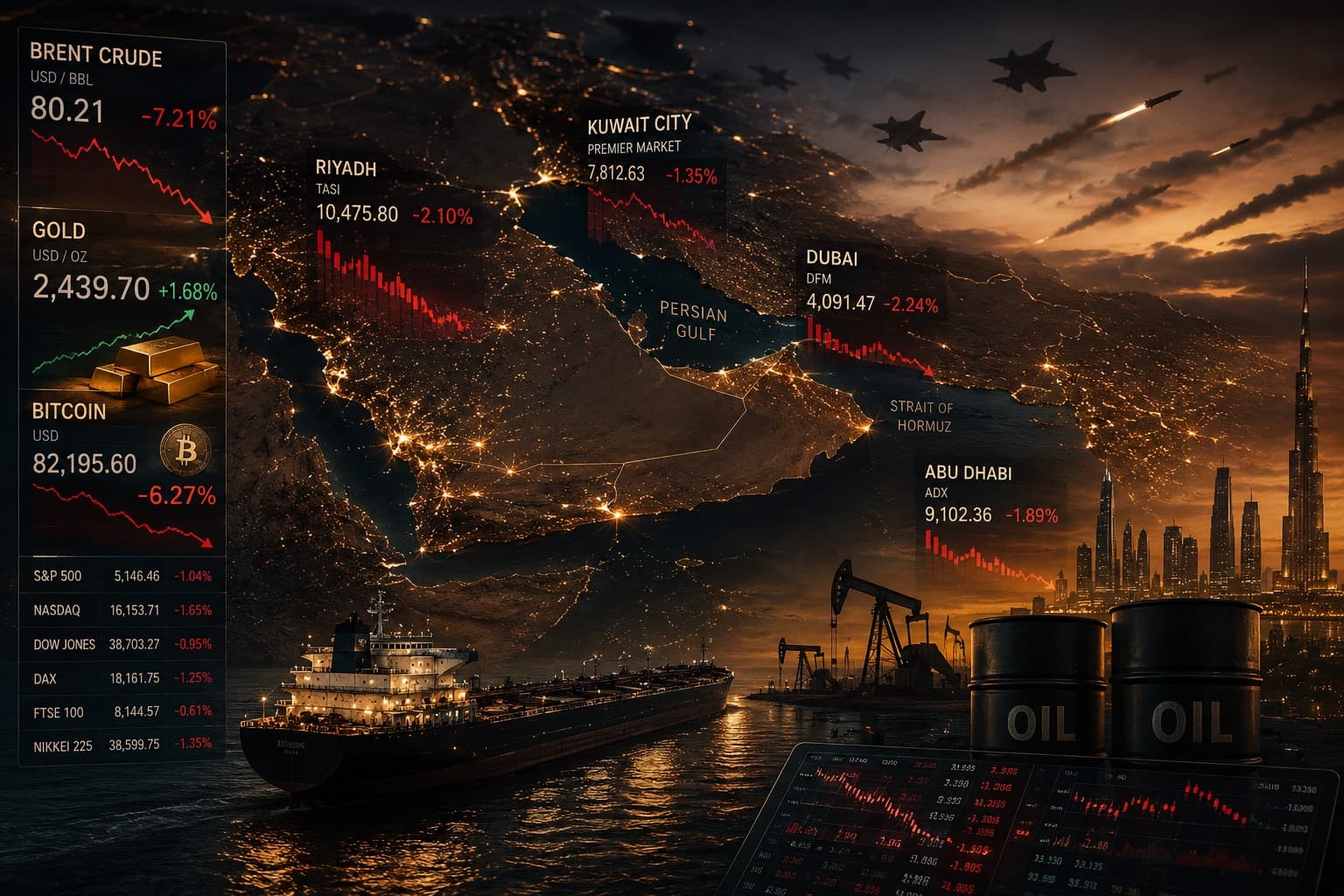
AI-generated illustrative image.
Source: Yemen Future Analysis Desk
The recent military escalation between Israel, the United States, and Iran has begun to generate significant economic repercussions across regional and global markets, affecting energy prices, financial markets, transportation, and investment flows.
One of the most immediate impacts has been in the oil market. OPEC+ agreed to a modest production increase of 206,000 barrels per day, yet concerns over potential disruptions to energy supplies from the Gulf pushed Brent crude prices up by approximately 8–10 percent in over-the-counter trading, reaching around $80 per barrel.
Market analysts warn that continued escalation could drive prices toward $100 per barrel, particularly if shipping routes or energy infrastructure in the Gulf region are affected.
The rise in oil prices has already increased pressure on the global aviation sector, where fuel remains one of the largest operating costs. Airlines worldwide are expected to face higher expenses if crude prices continue to climb in the coming weeks.
Financial markets across the region have also reacted negatively. Saudi Arabia’s benchmark index fell 2.1 percent to 10,475 points, recording its fourth consecutive daily decline and its longest losing streak in four months.
In the United Arab Emirates, authorities suspended trading on both the Abu Dhabi Securities Exchange and the Dubai Financial Market for two days as a precautionary measure amid heightened regional tensions.
Meanwhile, Kuwait resumed trading after a temporary suspension linked to security concerns surrounding the conflict.
Safe-haven assets benefited from the uncertainty. Gold prices in Egypt reached a record EGP 7,600 per gram for 21-carat gold as investors sought protection from market volatility and geopolitical risks.
Cryptocurrency markets also experienced turbulence. Bitcoin fell to its lowest level since October 2024 as investors moved away from riskier assets in favor of traditional safe havens.
Trade and logistics sectors have not been immune to the fallout. Reuters reported that gold shipments moving through Dubai, one of the world's largest precious metals trading hubs, are expected to decline significantly as airlines cancel flights and transportation networks face disruption.
Despite these developments, Abu Dhabi authorities confirmed that private sector activity continues normally and that business operations remain uninterrupted.
The broader economic outlook will largely depend on whether the confrontation remains contained or develops into a wider regional conflict. While markets have so far reacted primarily to uncertainty and risk perceptions, any prolonged disruption to Gulf energy exports, shipping routes, or aviation networks could produce more severe consequences for both regional and global economic stability.
Key words:
# Middle East Tensions
# Global Oil Markets
# Brent Crude Prices
# Regional Stock Markets
# Iran-Israel Escalation
Share: